As financial technology advances at lightning speed, cryptocurrencies are redefining investment opportunities and market dynamics. This article serves as your all-in-one guide to digital trading, from daily updates to practical tips for safe trading. Explore latest cryptocurrency developments, market analysis, investment strategies, and worldwide innovations to stay ahead in the trading game.
What you will learn from this article
- Daily cryptocurrency news: Keep track of the most important updates.
- Market analysis: Gain expert insights into price trends and market behavior.
- Investment strategies: Practical advice to optimize your trading safely.
- Global innovations: Stay informed about new directions and opportunities in crypto.
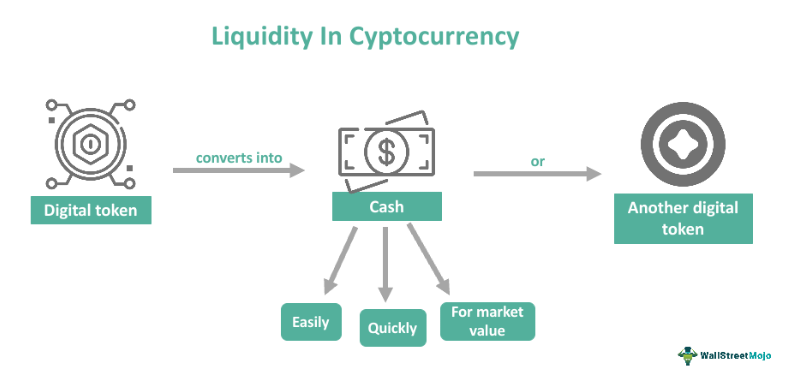
Liquidity is a critical concept in financial markets, including cryptocurrencies, influencing how easily assets can be bought or sold without significantly affecting their price.
As of August 3, 2026, with BTC (BTC) trading between $50,000 and $80,000 and ETH (ETH) targeting $4,000–$6,000, understanding liquidity is essential for investors navigating the volatile crypto market.



High liquidity ensures smooth transactions, while low liquidity can lead to price volatility and trading challenges.
This article explores what liquidity means in crypto markets, how it works, its importance, factors affecting it, and strategies for investors to leverage it effectively.
What Is Liquidity?
In crypto markets, liquidity refers to the ease with which a cryptocurrency can be bought or sold by a stable price without causing significant price fluctuations. It reflects the availability of buyers and sellers in the market and the volume of assets traded. Liquidity is measured by:
-
Order Book Depth: The volume of buy and sell orders by various price levels on an exchange. A deep order book indicates high liquidity, with many orders close to the current price.
-
Trading Volume: The total amount of a cryptocurrency traded over a period (e.g., 24 hours). Higher volume typically means better liquidity.
-
Bid-Ask Spread: The difference between the highest price a buyer is willing to pay (bid) and the lowest price a seller offers (ask). Narrow spreads signal high liquidity, while wide spreads indicate low liquidity.
For example, BTC, with a daily trading volume of ~$30 billion in 2026, is highly liquid, while smaller altcoins with $1 million daily volume are less liquid.
How Liquidity Works in Crypto Markets
Crypto markets operate on centralized exchanges (CEXs) like Coinbase and Binance, decentralized exchanges (DEXs) like Uniswap, and peer-to-peer platforms. Liquidity is facilitated by:
-
Market Participants: Buyers and sellers, including retail investors, institutions, and market makers, contribute to liquidity by placing orders.
-
Liquidity Pools: On DEXs, pools of paired assets (e.g., ETH/USDT) allow instant swaps, with users providing liquidity in exchange for fees.
-
Market Makers: Firms or algorithms that place buy and sell orders to narrow spreads and ensure constant trading availability.
Example
On Binance, a BTC order book with $10 million in buy orders by $79,500 and $10 million in sell orders by $80,000 indicates high liquidity. A $10,000 trade would barely move the price. Conversely, a low-liquidity altcoin with a $5,000 order book might see a 5% price swing from a $1,000 trade.
Why Liquidity Matters
Liquidity impacts crypto trading and investing in several ways:
-
Price Stability: High liquidity reduces price volatility, as large trades are absorbed without drastic price changes.
-
Ease of Trading: Liquid markets allow quick execution of trades by desired prices, beneficial for day traders and large investors.
-
Lower Costs: Narrow bid-ask spreads in liquid markets reduce trading fees and slippage (the difference between expected and executed prices).
-
Market Confidence: High liquidity signals a healthy market with active participation, attracting more investors.
-
Exit Plan: Liquid assets make it easier to sell holdings during market downturns, unlike illiquid coins that may be hard to offload.
For instance, BTC’s high liquidity in 2026 ensures investors can enter or exit positions efficiently, while low-liquidity altcoins risk “stuck” funds during bear markets.
Factors Affecting Crypto Market Liquidity
Several factors influence liquidity in crypto markets:
-
Trading Volume: High-volume coins like BTC and ETH have robust liquidity due to widespread adoption and trading activity.
-
Market Depth: Deep order books with many buy/sell orders near the market price enhance liquidity. Thin order books, common in smaller altcoins, reduce it.
-
Exchange Availability: Coins listed on major exchanges (e.g., Binance, Coinbase) have better liquidity than those on niche platforms.
-
Market Sentiment: Bull markets increase liquidity as more participants trade, while bear markets (e.g., 2022’s crash) reduce it due to lower activity.
-
Corporate Participation: Corporate investors and BTC ETFs (launched 2021–2023) boost liquidity by adding significant capital.
-
Liquidity Pools on DEXs: Large pools on Uniswap or Curve provide liquidity for Decentralized finance tokens, though smaller pools can be illiquid.
-
Regulatory Environment: Clear regulations attract institutional capital, enhancing liquidity, while bans (e.g., China’s crypto restrictions) reduce it.
-
Market Manipulation: Wash trading or spoofing on unregulated exchanges can artificially inflate volume, misleading investors about true liquidity.
Liquidity in the 2026 Crypto Market
As of August 3, 2026, the crypto market’s total capitalization is ~$2.91 trillion, with BTC and ETH dominating liquidity:
-
BTC: With $30 billion in daily volume and deep order books, BTC has narrow spreads (~0.1%) on exchanges like Binance.
-
ETH: ETH’s $15 billion daily volume, driven by Decentralized finance and NFT activity, ensures high liquidity, with ~$100 billion locked in Decentralized finance protocols.
-
Altcoins: Coins like Solana ($5 billion volume) and XRP ($2 billion volume) offer moderate liquidity, while smaller tokens (e.g., meme coins) often have wide spreads and low volume.
The Federal Reserve’s rate pause by 4.25%–4.50% in July 2026, combined with $483 million in BTC ETF inflows, has boosted liquidity, supporting a market rebound. However, low-liquidity altcoins remain prone to volatility, with 20% price swings common during market shifts.
Strategies for Navigating Liquidity
-
Choose Liquid Assets: Focus on high-volume coins like BTC or ETH for easier trading and lower slippage, especially for beginners.
-
Use Major Exchanges: Trade on platforms like Coinbase, Binance, or Kraken with deep order books and high liquidity.
-
Monitor Spreads: Check bid-ask spreads before trading. Avoid coins with spreads exceeding 1–2%, indicating low liquidity.
-
Leverage DEXs Wisely: Use liquid pools on Uniswap or Curve for Decentralized finance, but verify pool depth to avoid high slippage.
-
Apply Dollar-Cost Averaging (DCA): Invest fixed amounts regularly to mitigate the impact of volatility in less liquid markets.
-
Secure Assets: Store crypto in secure wallets (e.g., Ledger for cold storage, MetaMask for hot) to protect against exchange risks, especially for illiquid assets.
-
Track Volume and Depth: Use tools like CoinMarketCap, CoinGecko, or TradingView to assess trading volume and order book depth before investing.
-
Avoid Illiquid Markets During Volatility: In bear markets or liquidations (e.g., $355 million in July 2026), low-liquidity coins are harder to sell.
Risks of Low Liquidity
-
Price Volatility: Illiquid coins experience sharp price swings, as small trades significantly impact prices.
-
Slippage: Large orders in low-liquidity markets result in unfavorable execution prices, reducing returns.
-
Exit Challenges: Selling illiquid tokens during downturns can be difficult, trapping funds.
-
Manipulation: Low-liquidity markets are prone to pump-and-dump schemes, with whales exploiting thin order books.
Mitigation: Stick to top-tier coins, use limit orders to control trade prices, and diversify across liquid assets.
Liquidity Tools and Metrics
-
Order Book Analysis: Platforms like Binance or Kraken display order book depth, showing buy/sell order volumes.
-
Trading Volume: Check 24-hour volume on CoinMarketCap or CoinGecko for liquidity insights.
-
On-Chain Metrics: Tools like Glassnode or CryptoQuant track transaction volumes and active addresses, reflecting network liquidity.
-
Liquidity Pool Data: For DEXs, platforms like Dune Analytics show pool sizes and slippage risks.
The Crypto Landscape in 2026
As of August 3, 2026, the crypto market is buoyed by institutional adoption, with BTC ETFs and ETH’s Decentralized finance dominance driving liquidity.
The Fed’s rate pause has spurred a rally, with BTC up 4% and altcoins like Solana gaining 8%.
However, low-liquidity altcoins remain vulnerable to volatility, and scams exploiting thin markets persist. Investors must prioritize liquid assets and secure platforms to navigate this dynamic environment.
Reading the Market: Master Trends Before Making a Move
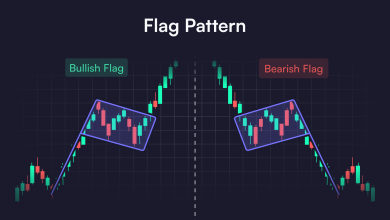
Understanding market trends is the key to making smart trading decisions. By learning to read the signals correctly, you can spot opportunities early and avoid costly mistakes.
1. Identify the Trend
- Look by the overall direction: uptrend, downtrend, or sideways movement.
- Use moving averages or trendlines to confirm market direction.
- Recognize trend strength before committing to a trade.
2. Spot Support and Resistance Levels
- Identify price levels where the market tends to reverse or pause.
- Support indicates a strong buying zone, resistance signals selling pressure.
- Use these levels to plan entry and exit points strategically.
3. Monitor Market Signals
- Pay attention to volume, momentum indicators, and price action patterns.
- Combine multiple indicators for more reliable signals.
- Avoid acting on a single signal; always confirm with the trend.
Mastering market reading helps traders anticipate movements, make informed choices, and trade confidently. Remember, success is not just about following the trend — it\’s about understanding it deeply and acting decisively.





Great update! This kind of crypto news helps a lot in making smarter investment decisions
Clear insights and well-structured content. This is exactly what crypto traders need
This article explains the market trends perfectly. Looking forward to more updates
This article explains the market trends perfectly. Looking forward to more updates
I always find valuable information before making any investment decision.